
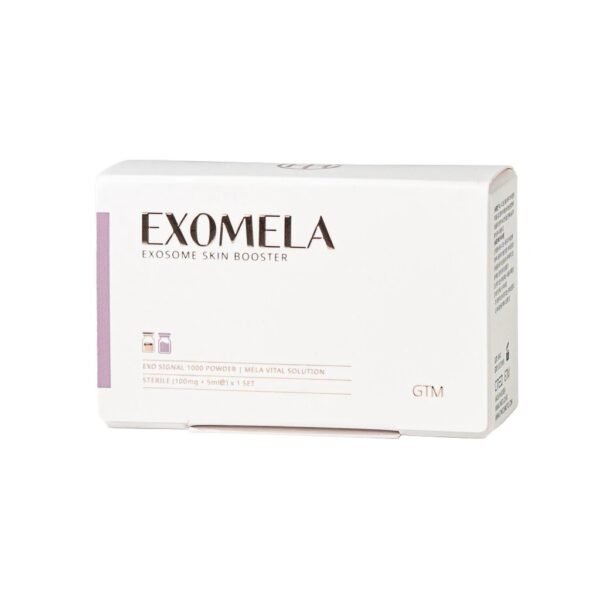
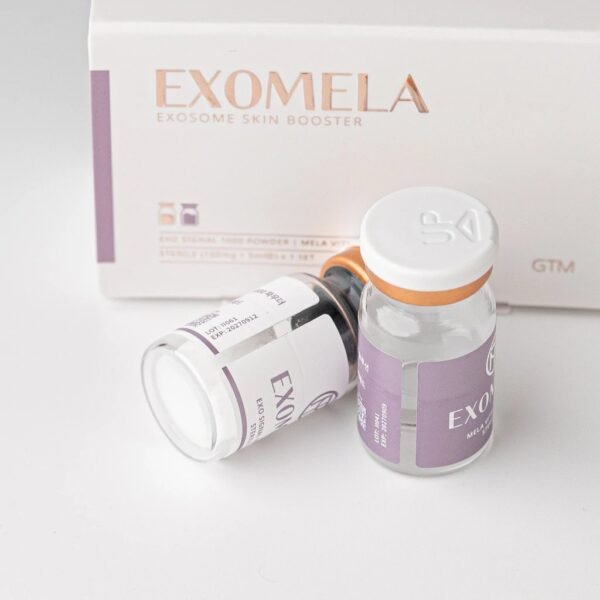
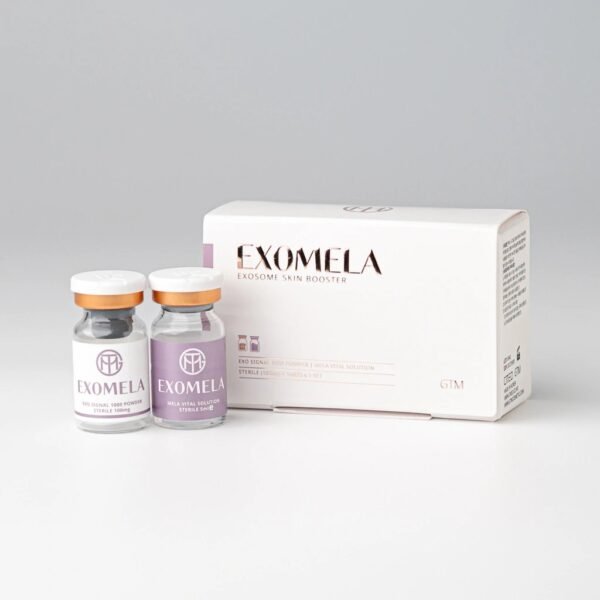
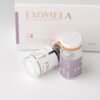
GTM EXOMELA® Exosome Skin Booster | GTM Cosmetics (South Korea)
Short Description
An advanced, two-part regenerative and brightening skin booster system pairing lyophilized EXO Signal 1000 Exosome Powder with Mela Vital Solution (5 mL). Formulated with purified stem cell/fibroblast-derived exosomes, Salmon PDRN, Tranexamic Acid, Glutathione, and Hyaluronic Acid, GTM EXOMELA® targets melasma, stubborn post-inflammatory hyperpigmentation (PIH), photoaging, and cellular senescence—accelerating tissue turnover, suppressing melanogenesis, and restoring luminous dermal clarity.
Detailed Description
GTM EXOMELA® (EXO Mela) is a professional-grade dual-phase exosome skin booster manufactured in South Korea by GTM Cosmetics / C-MED Global. Designed specifically to address hyperpigmentation and chronological skin fatigue simultaneously, it merges targeted nano-vesicular cellular signaling with established depigmenting and regenerative bio-actives.
The system functions through a synergistic two-vial reconstitution protocol:
-
Vial 1: EXO Signal 1000 Lyophilized Powder: Contains freeze-dried extracellular vesicles (exosomes) derived from stem cell/fibroblast conditioned media. These nano-sized carriers (~30–150 nm) penetrate target cell membranes to deliver regenerative microRNAs, messenger RNAs, and biological growth factors directly into fibroblasts and keratinocytes. This signal stimulates rapid cell turnover, repairs UV-damaged cell structures, and downregulates pro-inflammatory cytokines that exacerbate pigmentary disorders.
-
Vial 2: Mela Vital Solution (5 mL Activator): A concentrated liquid matrix formulated to reconstitute the exosome powder while delivering targeted depigmenting and structural nutrients:
-
Tranexamic Acid (TXA): Blocks the interaction of melanocytes and keratinocytes by inhibiting the plasminogen/plasmin pathway, suppressing UV-induced tyrosinase activation and vascular-driven melasma.
-
PDRN (Polydeoxyribonucleotide): Salmon-derived DNA fragments that activate cell-surface Adenosine $A_{2A}$ receptors, supplying nucleotides for DNA repair and accelerating tissue re-epithelialization.
-
Glutathione: Neutralizes intracellular free radicals and drives the conversion of eumelanin (dark pigment) into pheomelanin (light pigment), clearing sallow and dull undertones.
-
High-Purity Sodium Hyaluronate (HA): Re-establishes hydration reservoirs in the extracellular matrix, restoring moisture balance and skin elasticity.
-
Treatment Areas & Indications
-
Pigmentary Disorders & Uneven Complexion:
-
Epidermal and mixed-type melasma resistant to topical hydroquinone or standard peels
-
Post-inflammatory hyperpigmentation (PIH) secondary to acne or invasive aesthetic procedures
-
Solar lentigines, sun spots, and photo-damaged mottled pigmentation
-
Chronically dull, sallow, and devitalized skin tones
-
-
Cellular Rejuvenation & Texture Refinement:
-
Superficial dynamic and static rhytids, fine dehydration lines, and elastosis
-
Enlarged pore diameter and uneven skin surface micro-relief
-
Thinning dermal envelope and compromised cutaneous elasticity
-
-
Tissue Repair & Post-Procedure Synergy:
-
Prevention of rebound hyperpigmentation following Picosecond/Q-switched lasers, fractional RF, and chemical peeling
-
Calming erythema and speeding re-epithelialization after ablative and non-ablative resurfacing
-
Key Clinical Advantages
-
Intact Exosome Potency via Lyophilization: Freeze-drying the exosome fraction protects delicate signaling proteins and nucleic acids from degradation, ensuring full biological activity upon chairside reconstitution.
-
Dual Regenerative & Pigment-Targeting Cascade: Simultaneously repairs the extracellular matrix while interrupting multiple enzymatic steps in the melanogenesis pathway.
-
Vascular-Melasma Resolution: Tranexamic acid dampens underlying microvascular hyperactivity, addressing the vascular erythema component commonly seen in chronic melasma.
-
Broad In-Clinic Versatility: Designed for transdermal micro-channeling (MTS / automated microneedling pens), fractional RF post-infusion, electroporation, or targeted micro-papular mesotherapy protocols.
-
Minimal Downtime Profile: High concentrations of PDRN and exosome signaling factors suppress acute neurogenic inflammation, calming procedure-related erythema and reducing recovery time.
Technical Specifications
| Parameter | Specification |
| Product Classification | Regenerative Exosome Skin Booster / Depigmenting Mesotherapy |
| Manufacturer / Origin | GTM Cosmetics / C-MED Global (South Korea) |
| Packaging Presentation | 1 Set: 1 x EXO Signal 1000 Powder vial + 1 x Mela Vital Solution vial (5 mL) (also supplied as 5-set clinical boxes) |
| Key Active Ingredients | Stem Cell/Fibroblast Exosomes, Salmon PDRN, Tranexamic Acid, Glutathione, Niacinamide, Sodium Hyaluronate, Amino Acid Complex |
| Reconstitution Ratio | Draw 3.0–5.0 mL of Mela Vital Solution and inject directly into the EXO Signal Powder vial; gently swirl until fully dissolved |
| Target Application Layer | Epidermal-dermal junction and papillary dermis (0.5 mm to 1.5 mm depth) |
| Recommended Delivery Tools | Automated microneedling pen (0.5–1.5 mm depth), Meso-injector, or 32G / 34G (4 mm) micro-needles |
| Application Techniques | Transdermal micro-channeling infusion, nappage, or superficial micro-papular boluses (0.02–0.05 mL per point) |
| Standard Treatment Protocol | Induction: 3 to 5 sessions spaced 2 to 3 weeks apart; Maintenance: 1 session every 3 to 4 months |
| Expected Clinical Duration | Cumulative pigment clearing and skin radiance lasting 6 to 9 months post-protocol |
| Storage Instructions | Store unopened at 2°C to 25°C (36°F to 77°F); once reconstituted, use immediately or refrigerate (2°C–8°C) and consume within 24 hours |
| Regulatory Category | Professional Aesthetic Solution / Clinic-Use Only |
Professional Advisory: GTM EXOMELA® is a professional-grade aesthetic solution formulated strictly for credentialed dermatologists, plastic surgeons, and aesthetic practitioners trained in transdermal drug delivery and microneedling protocols. It is not formulated for intravenous, intra-arterial, or deep bolus structural tissue placement.


Reviews
There are no reviews yet.